


 English

|
Advertisement / Annons: |
Galaxy |
| Object : | M31, Andromeda Galaxy |
| Coordinates/Direction : | RA: 00h43m, DEC: +41o21' |
| Object size : | 189' x 61' |
| Object magnitude : | 3.44 |
| More to know : |
Wikipedia: https://en.wikipedia.org/ wiki/ Andromeda Galaxy |
M31 2024-09-14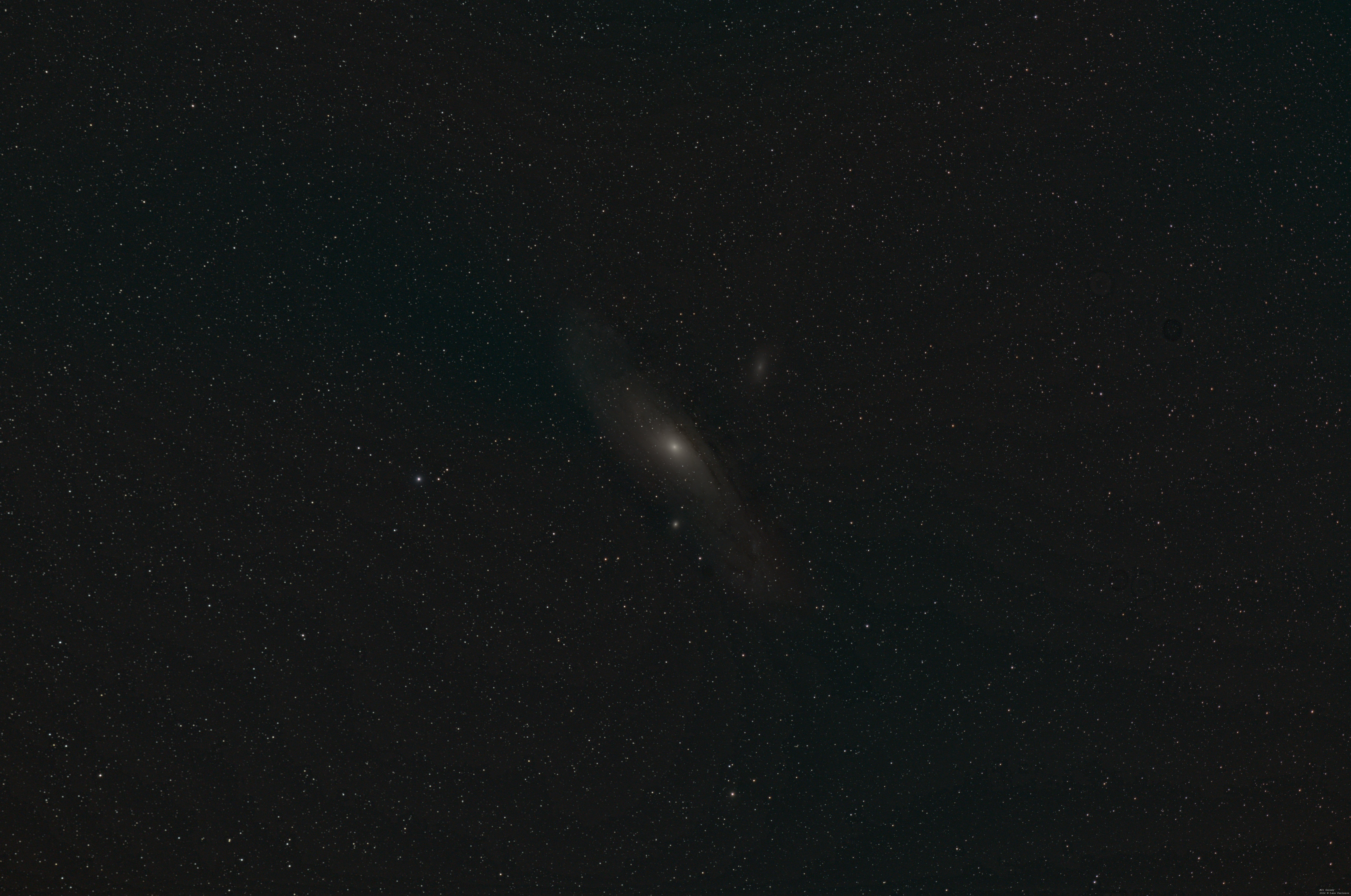 (Click on the image and get the full resolution one in a new window)
|
| Date : | 2024-09-14 |
| Time (UT) : | 19:53 to 21:39 |
| Mount : | SkyWatcher EQ6 Pro, Belt drive, beltdrive modified (DIY 2019) |
| Guide : | ASI120 camera with off-axis |
| Lens/telescope : | Pentax 645 FA 300 mm ED f/4 (medium format lens) |
| Corrector/Barlow : | - |
| Field (FOV) : | 6.8x4.5o (full frame) before crop |
| camera : | Nikon D800, QE=0.56, full frame, 36 Mpixel, 14 bit |
| camera temperature: | - , no temperature sensor |
| Film/CCD : | Raw, NEF |
| Filter : | none |
| Control system: | Mount, camera, focus, guide (Ekos) controlled by KStars/Ekos Linux, 64-bit |
| Exp. time : | 52x60 seconds, iso400, dithering every 3d |
| Image process tool : | Siril, Gimp, Irfanview |
| Processing : | synthetic bias, flat, photometric color calibration |
| Weather: | Clear sky, Temperature +14o C |
| Site : | Sweden, Stockholm, Hagsätra.
Bortle 9 Free view Az: 20o to 90o, 165o to 185o, Alt: 20o to 55o |
| Comment : | Continue testing what the Nikon D800 and Pentax 645 FA 300mm lens can deliver. Take a look at the huge resolution image, center and corner. |
M31 2024-08-25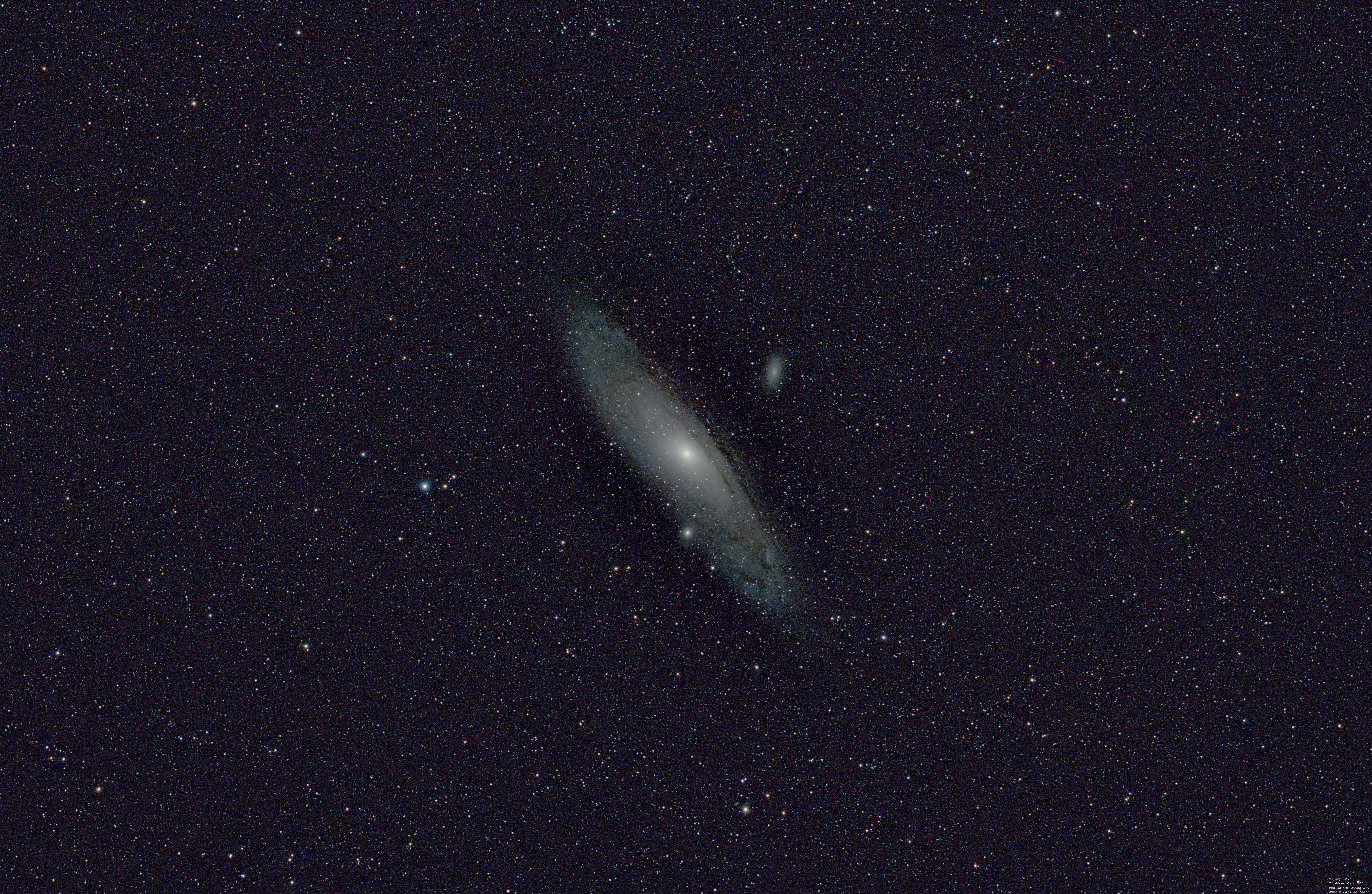 (Click on the image and get the full resolution one in a new window)
|
| Date : | 2024-08-25 |
| Time (UT) : | 20:37 to 22:56 |
| Mount : | SkyWatcher EQ6 Pro, Belt drive, beltdrive modified (DIY 2019) |
| Guide : | QHY5 camera with 200 mm f/3.5 lens |
| Lens/telescope : | Pentax 645 300 mm ED f/4 (medium format lens) |
| Corrector/Barlow : | - |
| Field (FOV) : | 6.8x4.5o (full frame) before crop |
| camera : | Canon 6D, QE=0.5, full frame, 20 Mpixel, 14 bit |
| camera temperature: | About 6o C above surrounding temperature |
| Film/CCD : | Raw, Cr2 |
| Filter : | none |
| Control system: | Mount, camera, focus, guide (Ekos) controlled by Astroberry (KStars/Ekos Linux) |
| Exp. time : | 72x60 seconds, iso1600, dithering mode |
| Image process tool : | Siril, Gimp, Irfanview |
| Processing : | synthetic bias, flat, photometric color calibration |
| Weather: | clear sky, temperature 17o C |
| Site : | Sweden, Stockholm, Hagsätra.
Bortle 9 Free view Az: 20o to 90o, 165o to 185o, Alt: 20o to 55o |
| Comment : | The last photo I took with my Canon 6D camera. |
M31 2023-09-24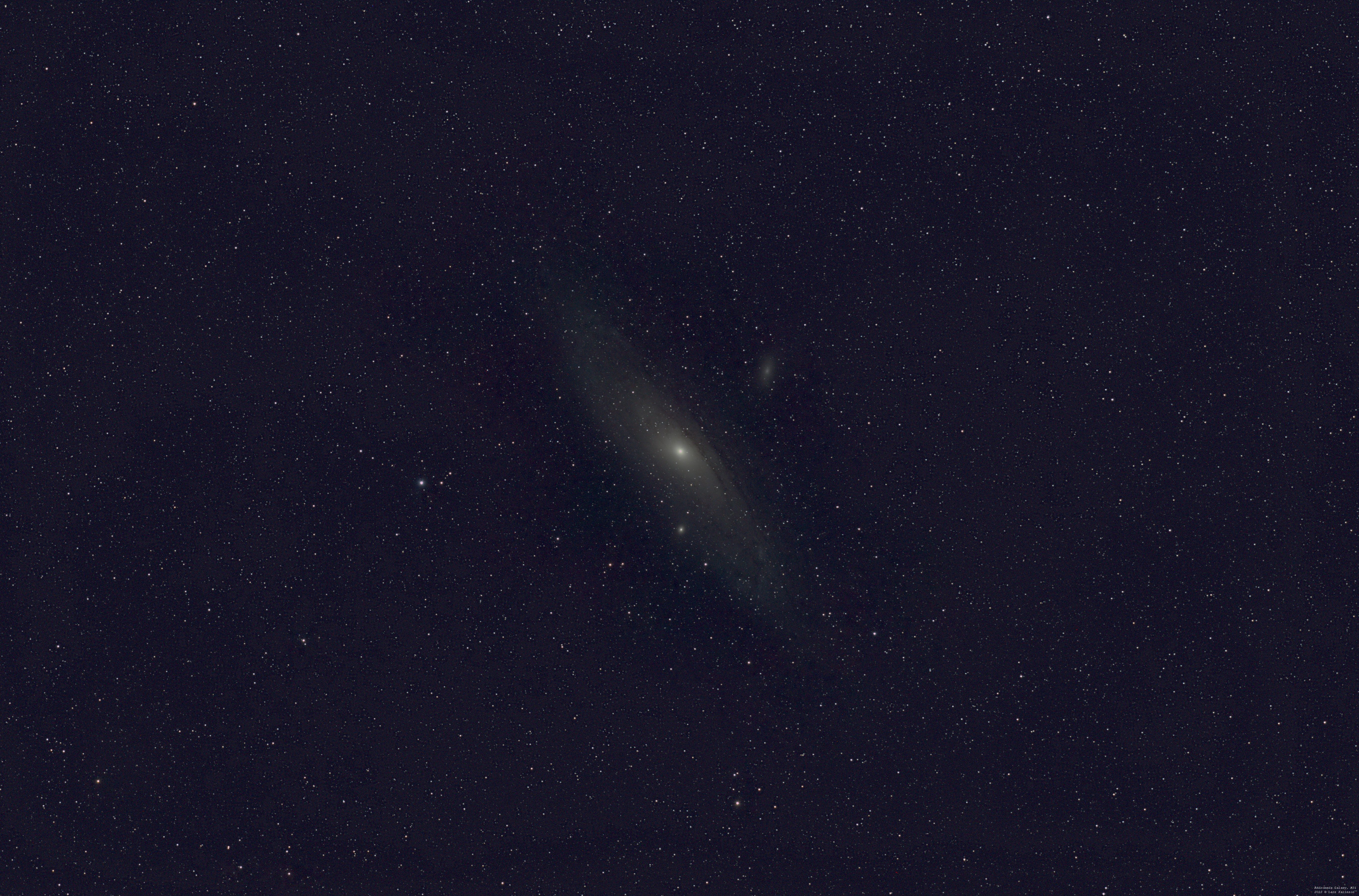 (Click on the image and get the full resolution one in a new window)
|
| Date : | 2023-09-24 |
| Time (UT) : | 18:52 to 20:06 |
| Mount : | SkyWatcher EQ6 Pro, Belt drive, beltdrive modified (DIY 2019) |
| Guide : | QHY5 camera with 200 mm f/3.5 lens |
| Lens/telescope : | Pentax 645 300 mm ED f/4 (medium format lens) |
| Corrector/Barlow : | - |
| Field (FOV) : | 6.8x4.5o (full frame) before crop |
| camera : | Canon 6D, QE=0.5, full frame, 20 Mpixel, 14 bit |
| camera temperature: | About 6o C above surrounding temperature |
| Film/CCD : | Raw, Cr2 |
| Filter : | none |
| Control system: | Mount, camera, focus, guide (Ekos) controlled by Astroberry (KStars/Ekos Linux) |
| Exp. time : | 60x60 seconds, iso1600, dithering mode | ||
| Image process tool : | Siril, Gimp, Irfanview | ||
| Processing : | synthetic bias, flat, photometric color calibration | ||
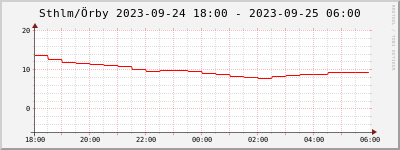
| Weather temperature: |
|
||
| Weather clouds: | clear sky |
| Site : | Sweden, Stockholm, Hagsätra.
Bortle 9 Free view Az: 20o to 90o, 165o to 185o, Alt: 20o to 55o |
| Comment : | I just wanted to have a photo from where I live with heavy light pollution to compare with these photos taken from Björnö. There is a difference ! |
M31 2023-09-21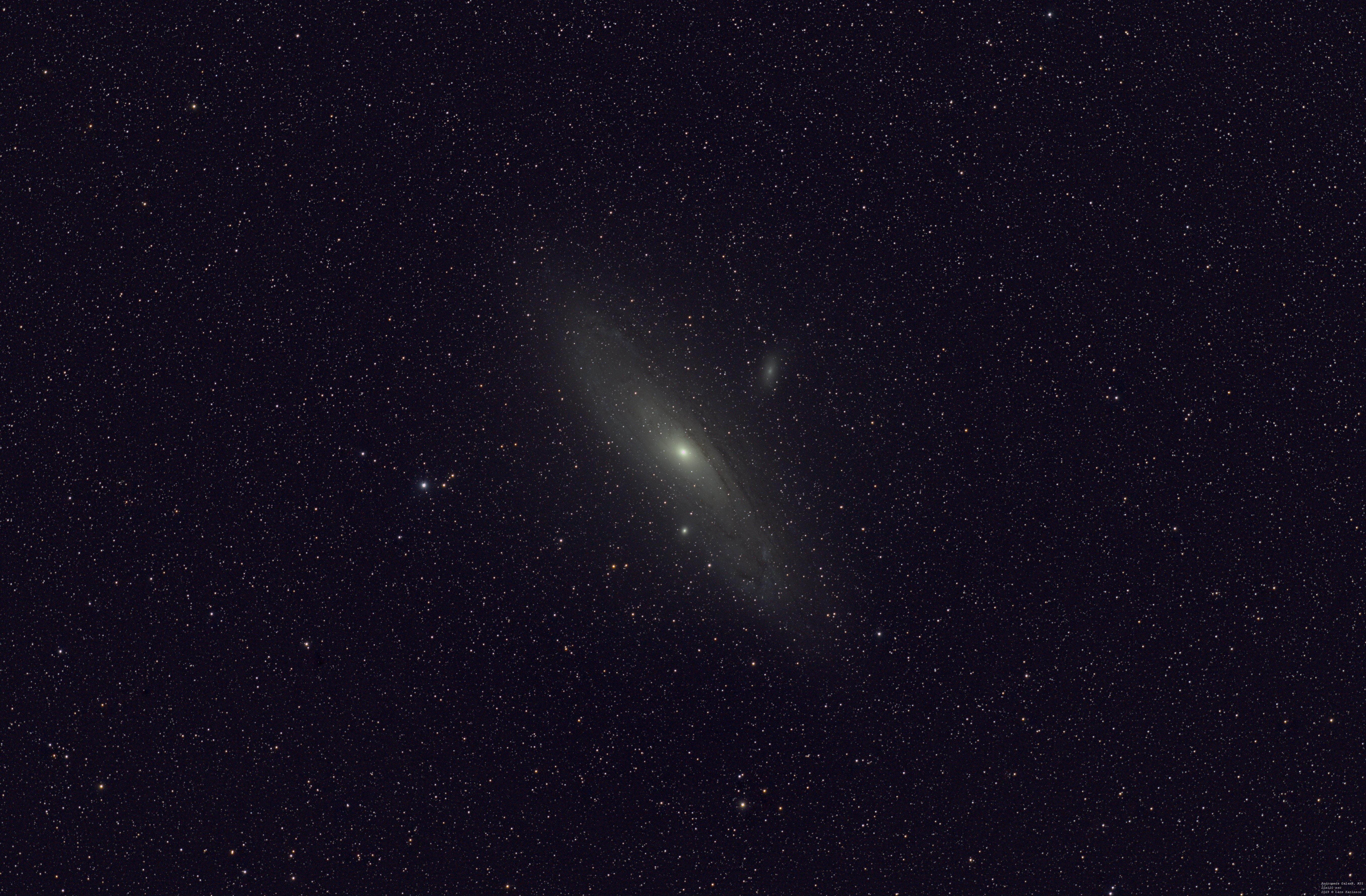 (Click on the image and get the full resolution one in a new window)
|
| Date : | 2023-09-21 |
| Time (UT) : | 19:08 to 20:02 |
| Mount : | SkyWatcher HEQ5, belt modified, low rider |
| Guide : | QHY5 camera with 200 mm f/3.5 lens |
| Lens/telescope : | Pentax 645 300 mm ED f/4 (medium format lens) |
| Corrector/Barlow : | - |
| Field (FOV) : | 6.8x4.5o (full frame) before crop |
| camera : | Canon 6D, QE=0.5, full frame, 20 Mpixel, 14 bit |
| camera temperature: | About 6o C above surrounding temperature |
| Film/CCD : | Raw, Cr2 |
| Filter : | none |
| Control system: | Mount, camera, focus, guide (Ekos) controlled by Astroberry (KStars/Ekos Linux) |
| Exp. time : | 22x120 seconds, iso1600, dithering mode | ||
| Image process tool : | Siril, Gimp, Irfanview | ||
| Processing : | cal bias, flat, photometric color calibration | ||
| Weather temperature: |
|
||
| Weather clouds: | 50% clouds |
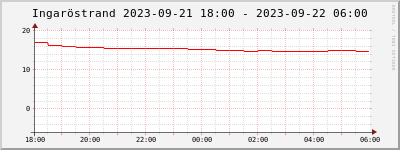
| Site : | Sweden, Stockholm, Björnö Nature reservation. Bortle 4 |
| Comment : | First out on the field photo of the season 2023. Even if it was promised a clear sky we had clouds that coming and go. This time I cranked up the saturation a bit. It was my first test of the new setup for clock synchronization and it worked very well. The clock, date and location must be correct, otherwise some of the functions get in trouble. That was a big step forward. Here is my story from the night in Swedish, My night book. |
Satellite galaxy M110 2023-09-21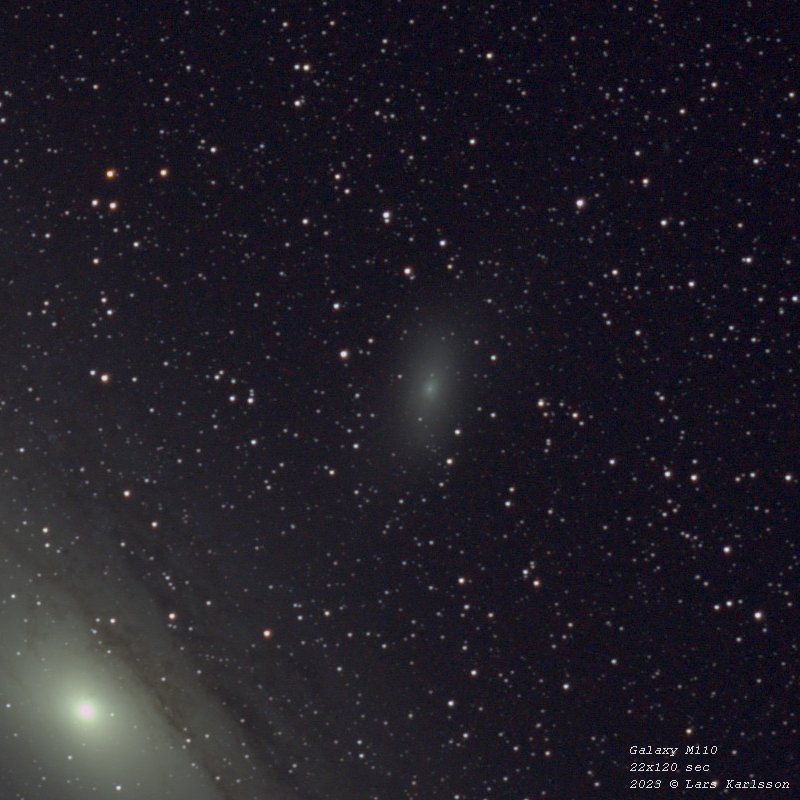
|
| Date : | 2023-09-21 |
| Time (UT) : | 19:08 to 20:02 |
| Comment : | The Andromeda galaxy has satellite galaxies as our own Milky Way. Here is M110, it's a dwarf elliptical galaxy. It's the last number in the Messier list. You find more details here: M110 Wikipedia. |
Satellite galaxy M32 2023-09-21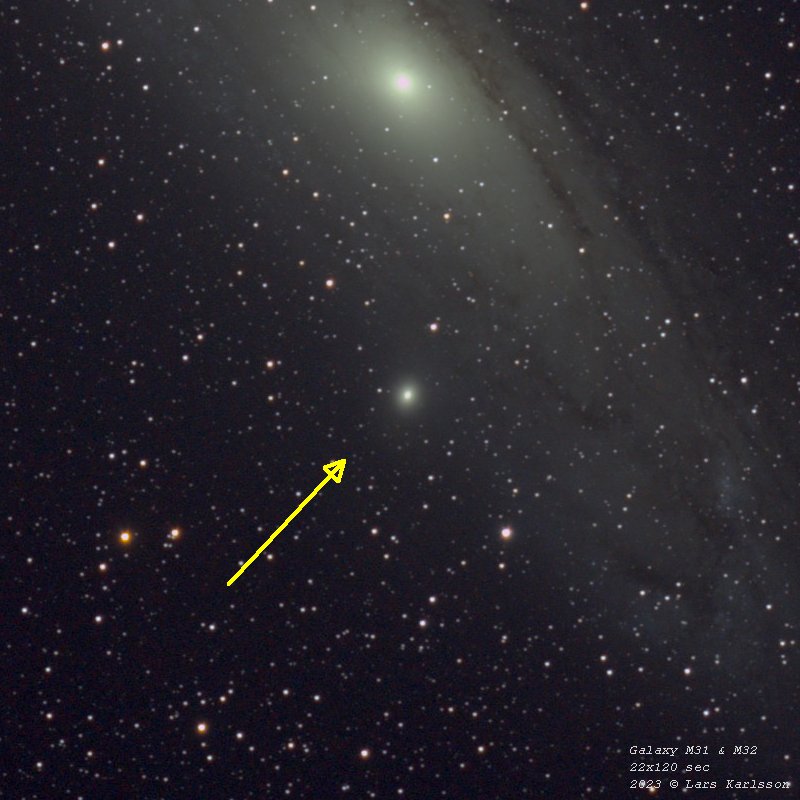
|
| Date : | 2023-09-21 |
| Time (UT) : | 19:08 to 20:02 |
| Comment : | One more satellite galaxy to M31, it's M32. It was discovered already 1749 by Guillaume Le Gentil. You find more details here: M32 Wikipedia. Notice the heavy dustlanes in the main galaxy M31. Places where stars are born at. |
M31 2022-11-12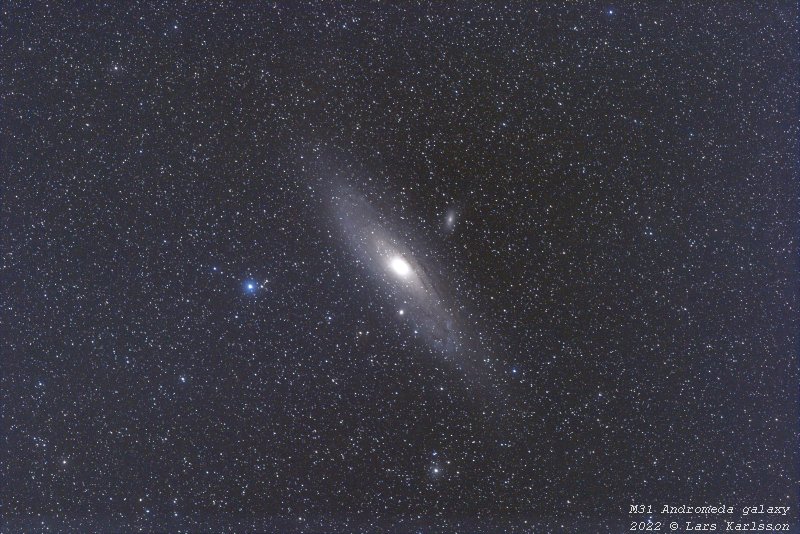
|
| Date : | 2022-11-12 |
| Time (UT) : | 19:53 to 20:17 |
| Mount : | SkyWatcher HEQ5, belt modified, low rider |
| Guide : | QHY5 camera with 200 mm f/3.5 lens |
| Lens/telescope : | Pentax 645 300 mm ED f/4 (medium format lens) |
| Corrector/Barlow : | - |
| Field (FOV) : | 6.8x4.5o (full frame) before crop |
| camera : | Canon 6D, QE=0.5, full frame, 20 Mpixel, 14 bit |
| camera temperature: | About 6o C above surrounding temperature |
| Film/CCD : | Raw, Cr2 |
| Filter : | none |
| Control system: | Mount, camera, focus, guide (Ekos) controlled by Astroberry (KStars/Ekos Linux) |
| Exp. time : | 12x60 seconds, iso1600, dithering mode | ||
| Image process tool : | Siril, Fitswork, Irfanview | ||
| Processing : | crop, resize, level, cal dark, bias, flat | ||
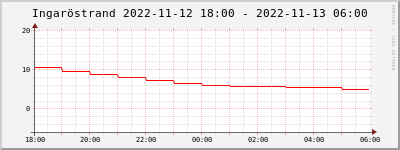
| Weather temperature: |
|
||
| Weather clouds: | 50% clouds |
| Site : | Sweden, Stockholm, Björnö Nature reservation. Bortle 4 |
| Comment : | After I had setup the equipment I started with an easy target, the big and bright M31 Andromeda galaxy. When doing this photographing a lot of clouds pass by and I had to trash more than half the photos. With high gain on the blue channel it gives this look of the galaxy. |
M31 2019-08-31, first light with Canon 300 mm f/4 lens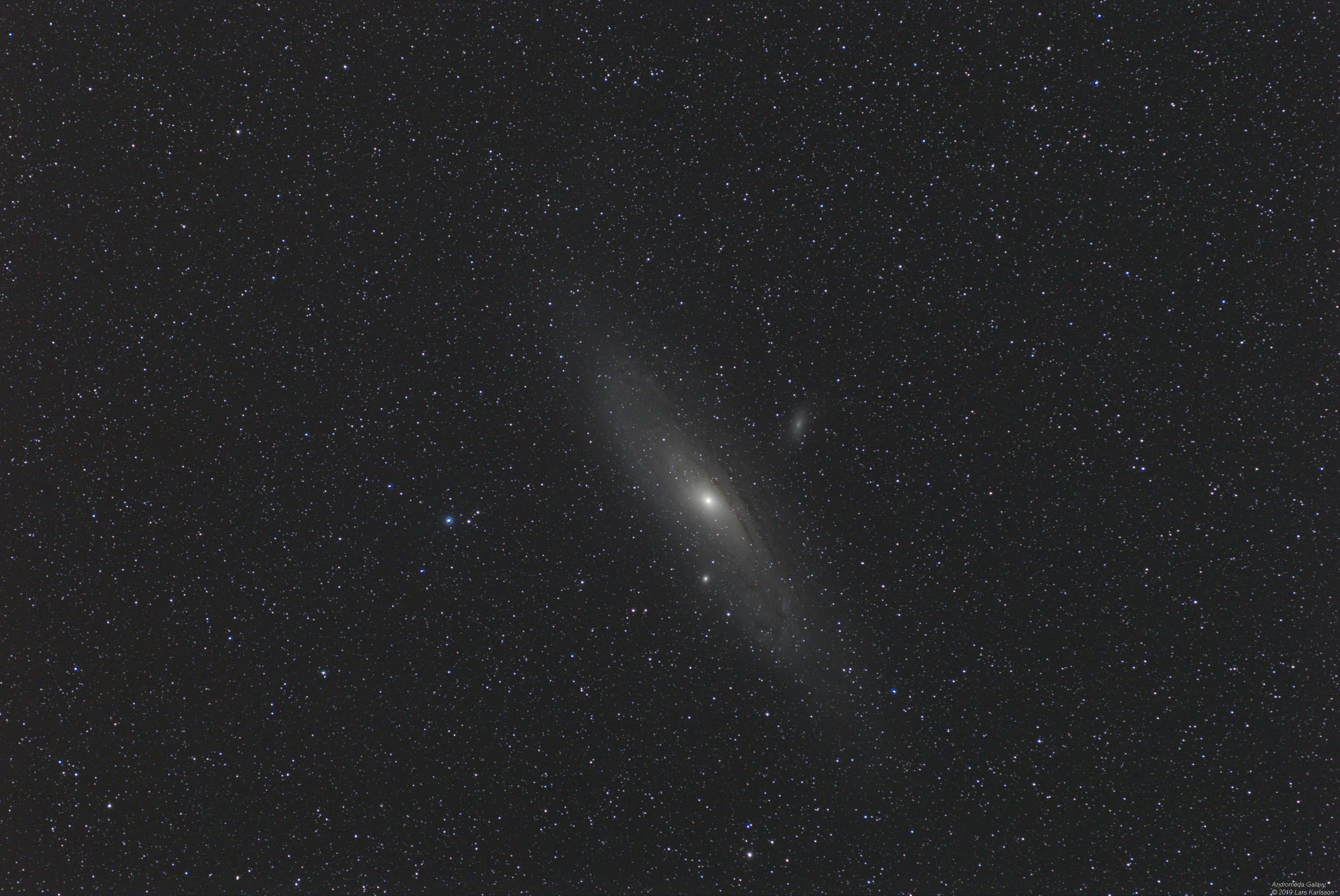 (click on the image to get a full resolution photo in a new window)
 |
| Date : | 2019-08-31 |
| Time (UT) : | 22:59 to 00:00 |
| Mount : | SkyWatcher Star Adventurer, light weight mount |
| Lens/telescope : | Canon L 300mm f/4 |
| Corrector/Barlow : | - |
| Field (FOV) : | 6.8x4.5o (full frame) before crop |
| camera : | Canon 6D, QE=0.5, full frame, 20 Mpixel, 14 bit |
| camera temperature: | About 6o C above surrounding temperature |
| Film/CCD : | Raw, Cr2 |
| Filter : | none |
| Control system : | Camera focus by Canon Remote APP, camera exposure by intervallometer |
| Exp. time : | 44x60 seconds, iso1600 |
| Image process tool : | AstroImageJ, Fitswork, Irfanview |
| Processing : | demosaic, flat calibrated, dark level adjust, median stack (to get rid of static pattern), crop, level |
| Weather: | clear |
| Site : | Sweden, Stockholm, Björnö nature reservation. Bortle class 4 |
| Comment : | M31 Andromeda Galaxy. This is the first image this season. It's also my first test of my new (used) Canon 300 mm f/4 lens. I was not sure if my relative simple mount Star Adventurer could handle this long focal length, but it worked. This lens has twice the focal length compared to my earlier lens, it helps a lot to see the details in the objects. Almost like a small telescope with built in field flattener and motor focus. This evening we had a private Star Party, we did visual observations, Starscapes and long exposures deep sky photos. I had some struggle with my mount, the coupling on DEC axis got broken, a fast solution fix needed to be handled. |
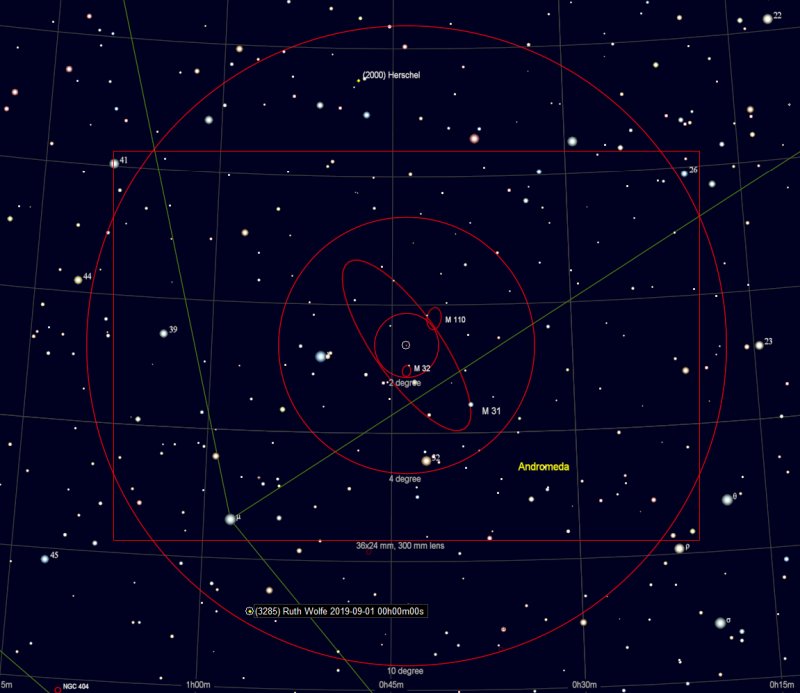 (credit CdC, Cartes du Ciel)
 |
| Date : | 2019-09-01 |
| Time (UT) : | 00:00 |
| Comment : | Asteroids ? A friend to me told that there is an asteroid in this photo. This is a star chart with the same date as the photo. I can see two asteroids, Herschel magnitude 14.2 and Ruth Wolfe magnitude 15.5. But both are outside of the field of the photography. Must investigate more deeper. |
M31 2017-08-15, wide angle version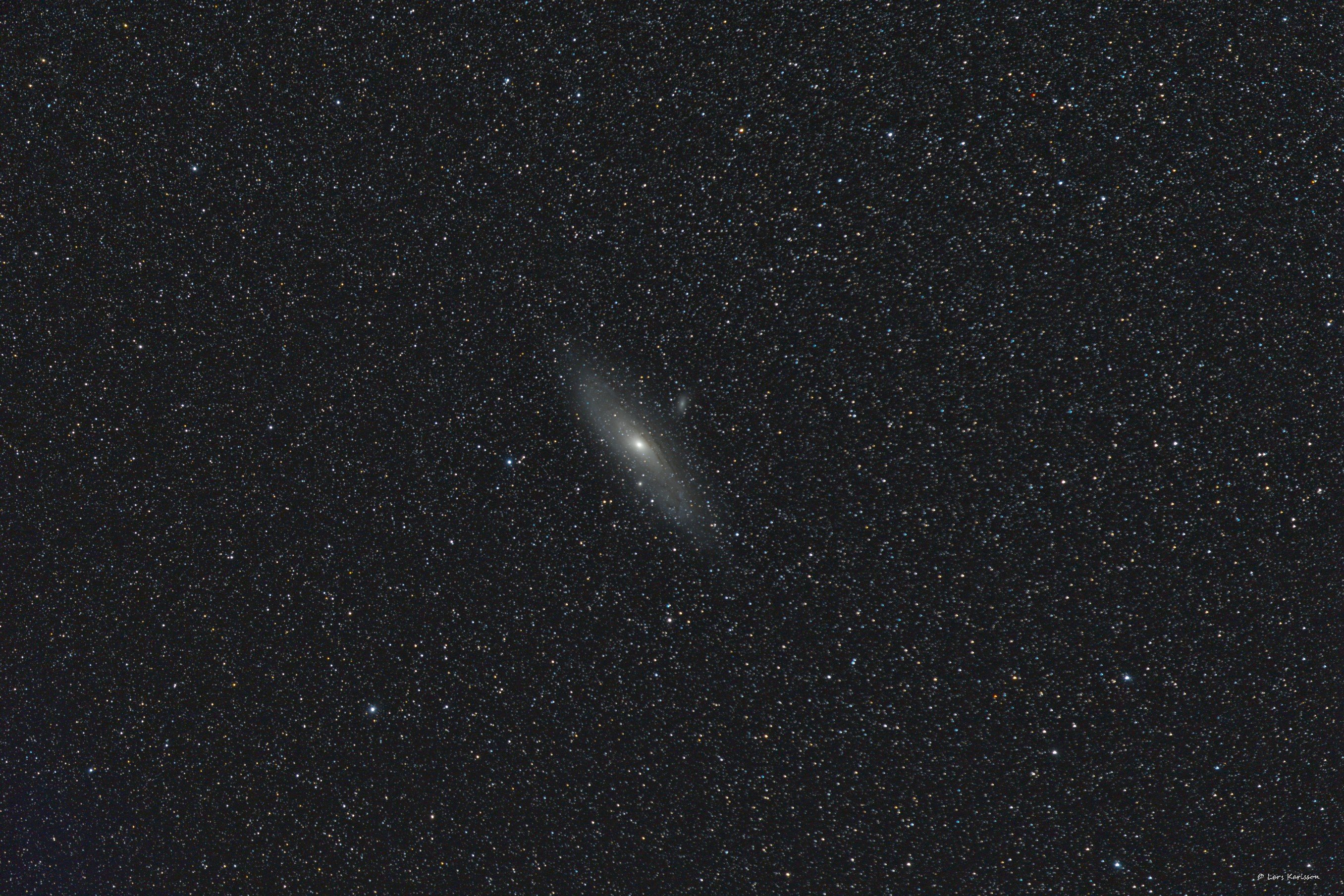 (click on the image to get a full resolution photo in a new window)
 |
| Date : | 2017-08-19 |
| Time (UT) : | 21:55 to 22:58 |
| Mount : | SkyWatcher Star Adventurer, light weight mount |
| Lens/telescope : | Sigma APO 150 mm f/2.8 (set to f/4) |
| Corrector/Barlow : | - |
| Field (FOV) : | 13.6x9.1o (full frame) before crop |
| camera : | Canon 6D, QE=0.5, full frame, 20 Mpixel, 14 bit |
| camera temperature: | About 6o C above surrounding temperature |
| Film/CCD : | Raw, Cr2 |
| Filter : | none |
| Exp. time : | 30x120 seconds, iso800 |
| Image process tool : | AstroImageJ, Fitswork |
| Processing : | demosaic, flat calibrated, dark level adjust, median stack (to get rid of static pattern), crop, level |
| Weather: | clear sky |
| Site : | Sweden, Stockholm, Björnö Nature reservation. Bortle 4 |
| Comment : | M31 Andromeda Galaxy. Same object as before, but now taken with the camera mounted on the big EQ6 mount, much more stable. Can you se any difference? |
M31 2016-09-10, version 2 with Siril processing and new flat frames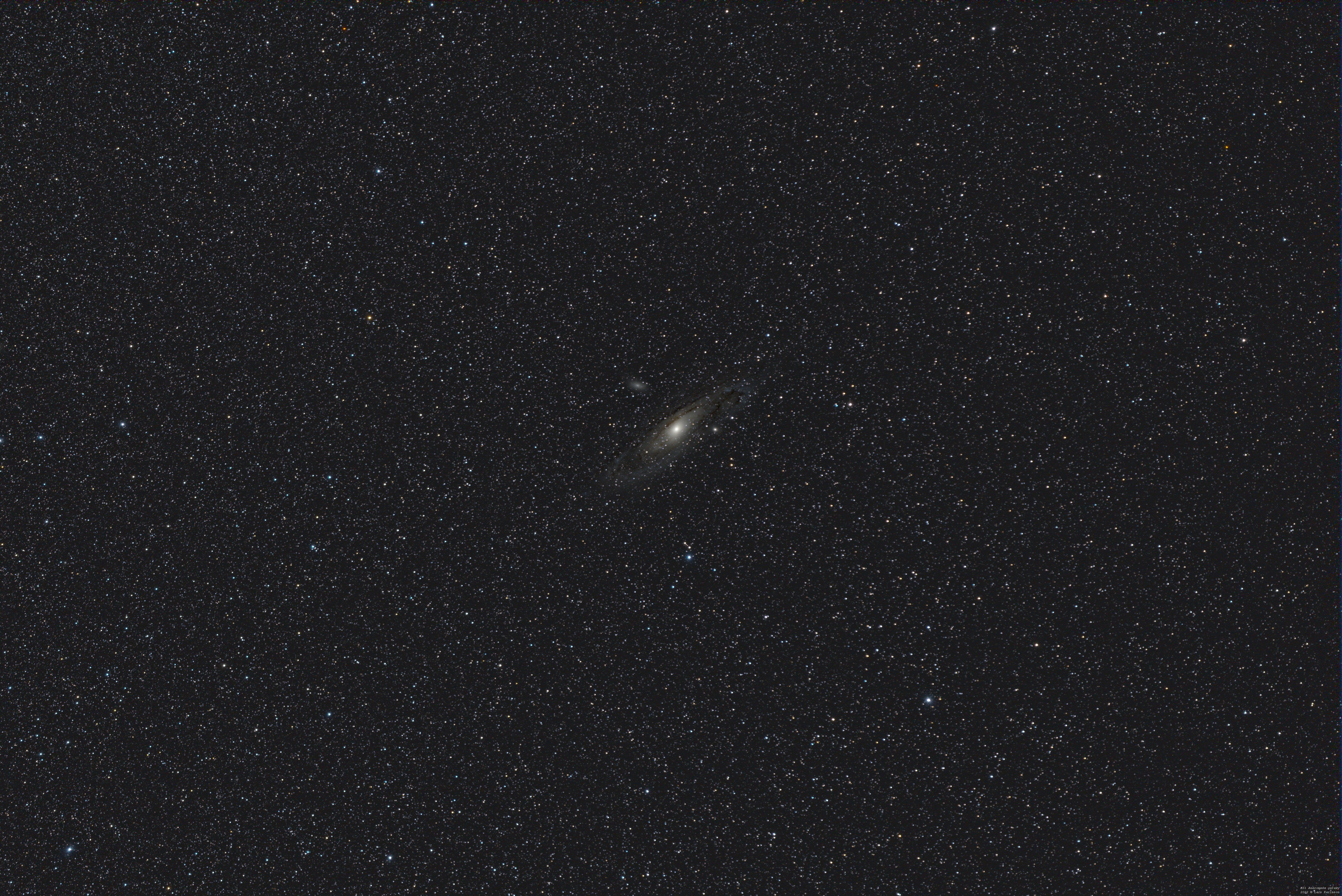 (click on the image to get a full resolution photo in a new window)
|
| Date : | 2016-09-10 |
| Time (UT) : | 20:19 to 23:45 |
| Mount : | SkyWatcher Star Adventurer, light weight mount |
| Lens/telescope : | Sigma APO 150 mm f/2.8 (set to f/4) |
| Corrector/Barlow : | - |
| Field (FOV) : | 13.6x9.1o (full frame) before crop |
| camera : | Canon 6D, QE=0.5, full frame, 20 Mpixel, 14 bit |
| camera temperature: | About 6o C above surrounding temperature |
| Film/CCD : | Raw, Cr2 |
| Filter : | none |
| Control system : | Camera focus by Canon Remote APP, camera exposure by intervallometer |
| Exp. time : | 80x120 seconds, iso400 |
| Image process tool : | Siril, Fitswork (new 2022) |
| Processing : | flat, dark, bias calibrated, median stack (to get rid of static pattern), crop, level |
| Weather: | clear |
| Comment : | M31 Andromeda Galaxy, version 2. The photo was taken with my Sigma APO 150 mm lens set to f/4. Even if it's taken with a short 150 mm lens you can still see details in the Galaxy. I have redone the image pre processing with Siril. I have more control of the process and can select which frames that will be included. I also borrowed a flat screen by my friend Rolf. See also the uncropped version by clicking on the image, so lot of stars ! With this less advanced mount it's not so easy to track the stars for 120 seconds. I'm very satisfied with my Star Adventurer mount. Later when I have collect more experience I hope to increase the exposure time. |
M31 2015-08-22, refractor APO version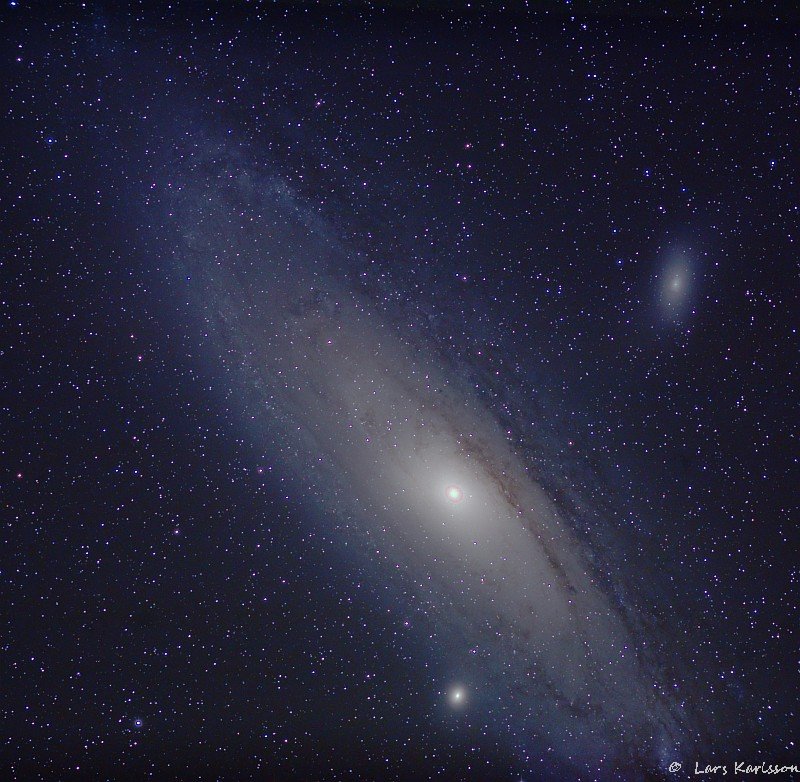
|
| Date : | 2015-08-21 + 2015-08-22 |
| Time (UT) : | 23:50 to - 01:05 |
| Mount : | SkyWatcher EQ6 Pro, Belt drive, beltdrive modified (DIY 2019) |
| Guide : | QHY5 camera with off-axis |
| Lens/telescope : | TS130 APO f/7 910mm (682mm, f/5.2), 3" focuser |
| Corrector/Barlow : | Riccardi 2.5" field flatter, x0.75. T48 connector to camera |
| Field (FOV) : | 3.0 x 2.0o (full frame) before crop |
| camera : | Canon 5D Mk I, QE=0.25, full frame, 12 Mpixel, 12 bit |
| camera temperature: | About 3o C above surrounding temperature |
| Film/CCD : | Raw, Cr2 |
| Filter : | none |
| Control system : | Mount by EQMOD, camera by APT, guide by PHD2, focuser by USB-focus, ASCOM Windows PC |
| Exp. time : | 19x30, 30x120, 16x240 seconds iso800, dithering mode |
| Image process tool : | DSS, Fitswork, Irfanview |
| Processing : | resize, level, cal dark&bias |
| Weather: | clear sky |
| Comment : | One of my first test with the modified adapters to reduce the vignetting problems.
Works fine relative earlier.
But as seen, the 30 seconds exposures doesn't fit very well at the high levels as in galaxy center.
Partly because this camera only has 12-bit depth. This was one and only time that I took my telescope out to the summerhouse. Relative our flat in city there is a huge difference in light pollution and what a difference it made. |
2006-11-26, my first photo of Andromeda galaxy, M31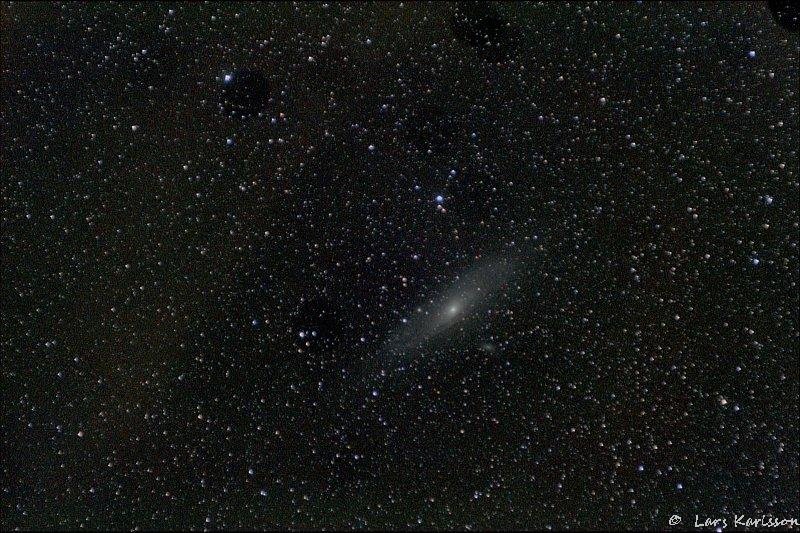
|
| Date : | 2006-11-26 |
| Time (UT) : | 18:57 to 19:36 |
| Mount : | SkyWatcher EQ4, modified central support |
| Lens/telescope : | Makinon 135mm f/2.8 |
| Corrector/Barlow : | none |
| Field (FOV) : | 12x8 degree, before cropping |
| Filter : | none |
| camera : | Canon 350D |
| Film/CCD : | iso800 |
| Exp. time : | of 38x60 seconds only 6 was used because of clouds |
| Weather: | clouds come and go |
| Site : | Sweden, Stockholm, Midsommarkransen. Bortle 9 |
| Comment : | This was my first attempt to to take a photography of the Andromeda galaxy, M31. It's our neighbor galaxy, maybe it will collide with us in the future. It's fantastic that it's possibly to take a deep sky image from city where I live, without any filter! |
|
| Go Back |